Invoice Factoring Requirements: Documents to Prepare
A factoring review commonly examines your business, customers, receivables and existing obligations. Prepare an accounts receivable aging report, sample invoices, supporting proof of delivery or service, customer details and accurate information about current financing.
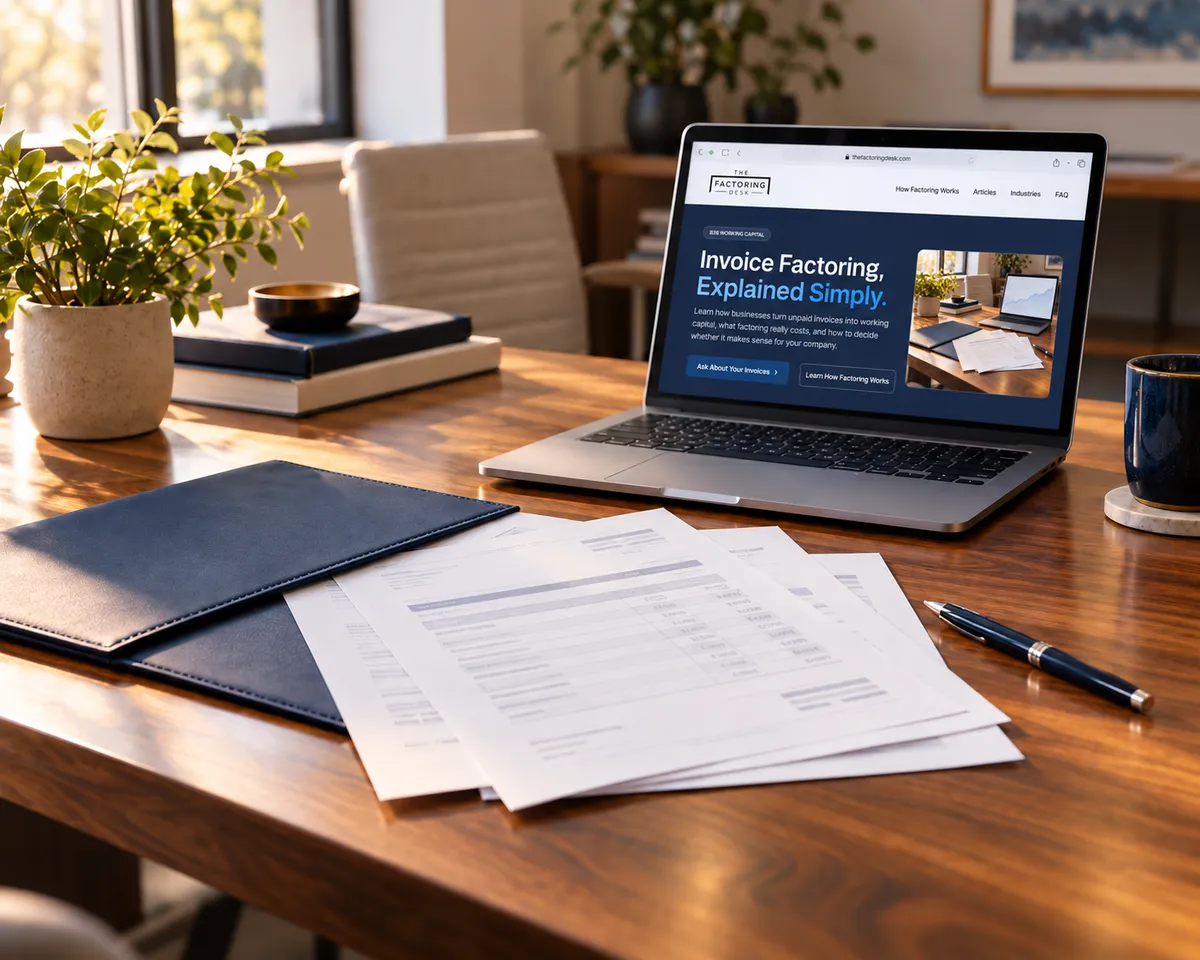
A complete application is not just a stack of documents. It is a coherent explanation of who owes your business money, why they owe it, when they pay and whether anyone else already has rights to those receivables. Preparing that explanation can reduce avoidable back-and-forth.
Start with your receivables report
Provide a current accounts receivable aging report showing customers, invoice dates, due dates and outstanding balances. Reconcile it with your records so it does not include invoices already paid or credit notes awaiting posting.
Explain older balances and identify disputes. If one customer represents most of the ledger, flag that concentration. A large total balance does not necessarily mean every dollar qualifies for an advance.
Match invoices to completed work
- Copies of invoices with the correct legal customer and payment terms.
- Purchase orders, customer contracts or rate agreements where relevant.
- Delivery receipts, freight documentation, approved timesheets or other evidence that supports the billed work.
- Customer contact details for billing and verification.
- Credit memos, deductions or known disputes affecting the balance.
The exact checklist varies. Ask the provider what it needs for your industry before sending a large document packet.
Disclose financing and ownership accurately
Providers may request business formation details, ownership information, financial records, bank statements and identification through their secure process. They may also review credit and public filings.
Explain existing loans, factoring arrangements, security interests and tax liens rather than assuming they are irrelevant. A provider needs to determine whether it can acquire or secure the receivables under its agreement. Never submit the same invoice to multiple funders as if each could have unrestricted rights to it.
Send sensitive documents through the right channel
Use a verified provider’s secure intake method for identification, account details or sensitive financial statements. An initial educational conversation does not require emailing every confidential record. Confirm the destination and the requested scope before uploading.
For a first conversation with The Factoring Desk, start with your industry, approximate monthly B2B invoice volume, typical invoice size, payment terms and main cash-flow need. Those details help explain your situation; the provider handles its own formal underwriting.
Finally, ask which step is next, what is still missing and whether the timing estimate refers to onboarding or a later invoice advance. Being organized improves the process but never guarantees approval.
Organize a review-ready invoice packet
Choose one representative invoice and trace it from the customer agreement to the outstanding balance. Use the same invoice number, customer name and service or delivery dates across the packet. If the records do not agree, explain the difference before a provider has to reconstruct it.
| Record | What it helps establish | Common mismatch to correct |
|---|---|---|
| Receivables aging | Current open balance and payment history | Paid invoices still shown as outstanding |
| Invoice | Legal payer, amount and payment terms | Wrong entity, duplicate number or missing reference |
| Agreement or purchase order | Agreed pricing and scope | Bill rate differs from the signed terms |
| Delivery or service support | What was completed and accepted | Missing signatures or unapproved hours |
| Credits and deductions | The collectible amount after adjustments | Credit memo omitted from the balance |
| Existing financing details | Other rights or obligations affecting receivables | Current lender or factor left out of the application |
Explain exceptions rather than hiding them
For example, an invoice may show $12,000 while the aging report shows $11,200 because an $800 credit has already been agreed. Include the credit record and show the remaining balance clearly. Presenting the full invoice without that adjustment can create avoidable verification questions.
Similarly, a customer may trade under one name while another legal entity pays. Explain the relationship and provide the agreement showing who owes the balance. The provider determines what evidence is sufficient; your role is to present accurate records.
Keep the first inquiry lightweight
Start with your industry, approximate monthly B2B billing, payment terms, typical invoice size and cash need. Have a short list of major customers and any known disputes ready for the conversation. An initial referral inquiry is different from a formal provider application and does not require a complete confidential document package.
Once a provider supplies its checklist, create a dated index of the files requested, sent and still outstanding. Confirm the recipient and upload method. Ask whether redacted samples are suitable for the preliminary review before sharing full records.
Do a final consistency check
Reconcile invoice balances to the current ledger, verify contact details for billing and acceptance, and disclose relevant loans or factoring arrangements. Ask the provider which missing item is blocking the next step. An organized submission can reduce corrections, but customer credit, invoice eligibility and the provider’s review still determine the outcome.
Common questions
Do I need perfect business credit?
Requirements vary. Customer credit is important, but a provider may also review your business, owners and financial obligations.
Can overdue or disputed invoices qualify?
Do not assume so. Eligibility depends on age, enforceability, customer credit, disputes, documentation and the provider’s rules.
Sources and further reading
Provider resources describe their own programs; they do not establish terms for every factoring agreement. This article includes original examples and practical questions from The Factoring Desk.